MONOPOLY Match
BeeMatch LtdPuzzle
4.72.78K Reviews
- Version
- 0.3.14794
- Installs
- 100.00K
- Age Rating
- Everyone
Screenshots
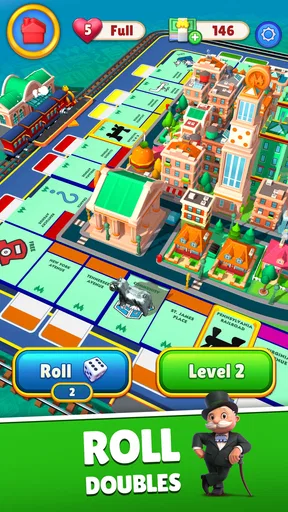
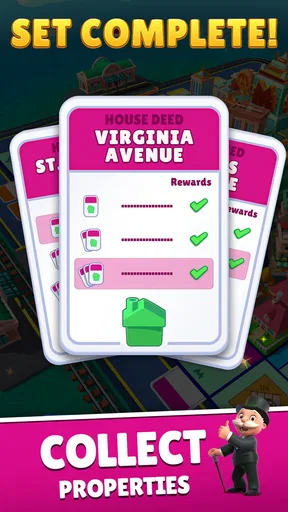
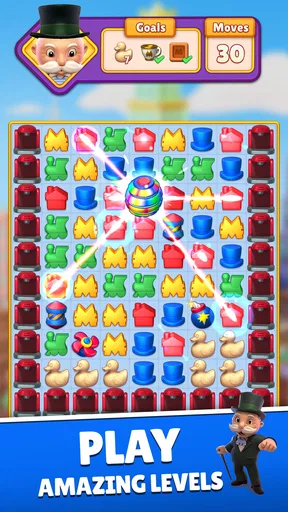
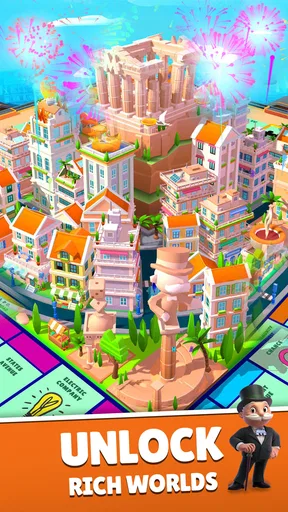
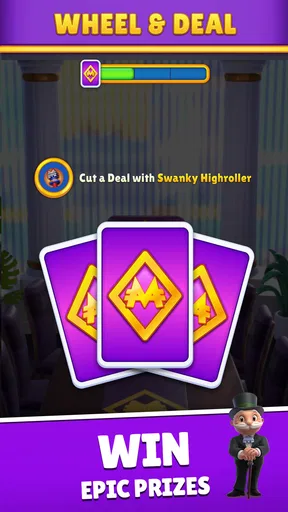
Our Review of MONOPOLY Match
 Analysis by Appyee
I approached MONOPOLY Match expecting a familiar board-game theme wrapped around a puzzle game, but the experience is better understood as a compact mobile routine than as a direct replacement for a full Monopoly session. It is a free puzzle game from BeeMatch Ltd, rated for Everyone, and its central appeal is the way it brings property-trading imagery into short, approachable play sessions. The presentation is recognizable without requiring me to know every rule of the classic board game, which makes it easy to pick up when I have only a few spare minutes.
The important distinction is that this is not the same kind of experience as sitting around a table with friends, negotiating trades, and waiting for the dice to change the whole game. Its board-game identity supplies the atmosphere, while the moment-to-moment activity is built for touchscreens and quick decisions. I found that difference helpful to understand before playing, because it sets the right expectations: this is best for casual puzzle fans who enjoy a Monopoly-flavored setting, not for someone looking for a complete digital recreation of the traditional tabletop rules.
How the current version feels to play
At its current version, 0.3.14794, the game feels like a product that is still establishing its shape rather than a long-established, feature-heavy classic. That is not automatically a weakness. A lighter structure can make the first sessions less intimidating, especially for younger players or anyone who prefers games that explain themselves through simple interaction instead of a large rulebook.
I also like that the age rating is Everyone. That makes the game easier to consider for shared household use, although adults should still remember that the free download includes optional purchases ranging from $0.99 to $99.99 per item. The wide range matters more than the lowest price: a child can enjoy the basic game without spending money, but purchase controls are sensible on any device used by a family.
The public response is encouraging, with a 4.7 average from around 16 thousand ratings and over 100 thousand installs. Those figures suggest that the basic formula is connecting with a substantial early audience. They do not guarantee that every player will enjoy the same pace or progression, but they do make this more than an obscure experiment. I would describe it as a promising, accessible puzzle release whose long-term appeal depends on how well its later updates add depth without making the opening experience less friendly.
A good fit for short breaks
My favorite use case is an ordinary waiting period: a bus stop, a coffee break, or the few minutes before an appointment. The Monopoly theme gives each session a little more personality than an anonymous set of colored tiles, while the puzzle format avoids the commitment of a long board-game match. I can start without organizing other players, explain nothing to anyone, and stop when the break ends.
That convenience is also the main trade-off. A traditional board game creates tension through conversation and shared decisions. Here, the interest is more private and repeatable. If what you want is a social evening with arguments over property, this game cannot provide that atmosphere on its own. If you want a solo puzzle with familiar visual cues, it makes much more sense.
What the Monopoly theme adds
The licensed-style setting is not just decoration in my experience. It gives the puzzle loop a clear emotional frame: collecting, progressing, and seeing a board-game world develop feels more inviting when the visual language is already familiar. Even players who have not played the tabletop version can recognize the general mood immediately.
Still, the theme should not be mistaken for mechanical complexity. The presence of properties and Monopoly imagery does not mean that every classic rule, negotiation, or economic decision appears here. That is why I would compare it with themed match-and-puzzle alternatives rather than with a full digital board game. Someone choosing between this and a conventional match game should pick this one for the setting and presentation, not because it reproduces the complete original.
Small decisions make the difference
The most useful habit I developed was slowing down before making an obvious move. In a mobile puzzle, the first available match can look attractive, but a slightly less immediate choice may leave a cleaner arrangement for the next turn. I recommend scanning the whole visible play area, identifying difficult colors or blocked spaces, and then choosing the move that improves future options rather than only producing the quickest reward.
A second practical tip is to treat progress as a sequence of manageable attempts. When a stage feels awkward, I do not keep repeating the same opening automatically. I look for what caused the board to become restrictive, then change the first few decisions. This is a small adjustment, but it prevents the game from turning into mindless tapping and makes the puzzle element feel more deliberate.
There is also a useful distinction between playing for relaxation and playing for efficiency. If I am using the game to unwind, I accept slower progress and focus on satisfying combinations. If I am trying to advance, I pay more attention to preserving space and setting up later moves. The same board can feel different depending on that goal, which gives the simple format more flexibility than the store summary suggests.
A practical pause before starting
When I open a casual game during a busy day, I want to know that I can put it down without turning a short break into a chore. This one suits that habit because its appeal is based on brief puzzle play rather than organizing a group. I would still choose a moment when I can pay attention to the board: making moves while distracted may be fine for casual play, but it is less satisfying if I am trying to plan ahead.
For a first session, I would keep the goal modest: learn the basic rhythm, see whether the visual style appeals to me, and notice whether I enjoy thinking through the available moves. There is no need to decide immediately whether it will become a daily game. A useful test is whether I want another round after the novelty of the Monopoly setting wears off, rather than whether the first few minutes feel familiar.
What has changed and what that means for players
The release date of November 6, 2025, and the relatively early version number place the game in a young stage of its development. I would not judge it as though it were a mature puzzle platform with years of accumulated systems. The current build is more useful as a snapshot of the direction BeeMatch Ltd is taking: a recognizable board-game identity combined with accessible puzzle play and a free-to-start structure.
For a new player, that early position is mostly positive. The learning curve is not weighed down by years of added menus or complicated layers. I can understand the basic purpose quickly and decide whether the core loop suits me before investing much time. The downside is that players seeking a large amount of variety immediately may find the current experience less substantial than a long-running puzzle game.
Existing users are likely to notice the difference between familiarity and permanence. A game at this stage can feel fresh because its direction is still developing, but it also asks for patience. I would install it if I enjoyed the central puzzle rhythm and the Monopoly-inspired presentation, while keeping my expectations measured about how much content or refinement should already be present.
The public review count, around 2.8 thousand, shows that many players have taken the time to comment rather than simply install and leave. I see that as useful context when weighing the strong average rating: there is a visible group actively responding to the experience. Even so, ratings are best treated as a starting signal. My own recommendation depends more on whether you enjoy short solo puzzles than on the number beside the star icon.
Where the free model needs attention
The free price lowers the barrier to trying the game, but the optional purchase range means the experience should be approached with a little financial awareness. I would not spend immediately. First, I would play enough to decide whether the basic loop remains enjoyable without buying anything. That test is especially important for casual players, because a game can be pleasant for ten minutes yet fail to hold attention over several days.
For families, I would set a simple rule before handing over the device: play is free to begin, but purchases are separate decisions. The Everyone rating helps with suitability, not with spending habits. This is one of those cases where the age label and the payment model answer different questions, and both deserve attention.
Another limitation is the likely gap between themed familiarity and strategic depth. The Monopoly name creates expectations of deals, risk, and long-term money management. Players who want those systems should choose a dedicated digital board-game adaptation instead. This title is the better choice when the familiar brand is a doorway into puzzle play, not when it is the main reason you want to roll dice and manage a portfolio.
Who should install it, and who should skip it?
I would recommend it to fans of approachable puzzle games, players who like recognizable board-game worlds, and people who want something they can play independently in short sessions. It is also a reasonable option for a family device because the content rating is Everyone, provided that adults handle purchase settings responsibly.
I would skip it if you need deep competitive strategy, a strong multiplayer conversation, or a faithful recreation of classic Monopoly. I would also be cautious if you dislike free-to-play games with optional purchases, even when the initial download costs nothing. In that situation, a paid puzzle game with a clearly defined purchase may feel more comfortable and predictable.
Compared with a standard match-style puzzle, this game offers more personality through its board-game setting. Compared with a traditional Monopoly app, it should feel quicker and easier to enter, but less socially rich and less focused on negotiation. That middle position is its clearest identity. It is not trying to replace both categories; it borrows the most accessible parts of each.
Getting unstuck without overcomplicating it
If a round goes poorly, I find it more useful to pause and inspect the board than to tap faster. I look for whether a particular area has become difficult to work with, then consider a different opening on the next attempt. That small reset in approach is better than assuming every unsuccessful run means I need to buy something or change how I use the game.
When the game itself does not seem to respond as expected, I start with ordinary checks rather than guessing at a special fix: make sure the device has a stable connection if the current activity needs one, close and reopen the app, and check that the installed version is current. If the issue continues, restarting the device is a sensible general step. These are basic troubleshooting habits, not a guarantee that every problem comes from the phone or can be solved locally.
It is also worth separating a puzzle setback from a technical problem. A difficult board is part of the play experience; a frozen screen or an action that does not register is different. I would avoid repeating taps rapidly when something appears stuck, since that makes it harder to tell whether the game has recovered. A brief pause and a careful retry give me a clearer read of what is happening.
Choosing the right kind of puzzle break
Someone deciding between this and a plain match puzzle should ask what makes them return to a game. If they mainly want a clean, abstract challenge, a conventional puzzle may be the better fit. If familiar board-game surroundings make a simple session more inviting, this one has a stronger identity. Neither approach is automatically deeper; the difference is whether theme adds enough enjoyment to balance the lighter relationship to classic Monopoly.
I would also distinguish it from a tabletop session when choosing a game for a group. A phone puzzle is convenient when people are waiting or taking turns with the device, but it does not recreate the negotiations and shared surprises that make a board game lively around a table. For a family looking for a conversation-led activity, bringing out a physical game or choosing a digital adaptation designed around multiplayer play is a better match.
What I would watch as development continues
The next meaningful test is whether future development adds variety while preserving the clean entry point. I would look for more reasons to return after the initial novelty fades, clearer distinction between different kinds of challenges, and improvements that make progression feel rewarding without pushing players toward purchases. Those are expectations, not claims about features already present, but they are the areas that will determine whether this early release becomes a lasting favorite.
I would also watch how the game balances its two identities. If the puzzle side becomes too repetitive, the Monopoly theme may not be enough to carry long-term interest. If extra systems become too complicated, the approachable quality that makes it attractive today could disappear. The strongest path would be gradual expansion: more meaningful decisions and freshness, but without turning a short-break game into a demanding daily obligation.
For now, I see MONOPOLY Match as an easy recommendation for the right player rather than a universal pick. Its strongest qualities are accessibility, familiar presentation, and a format that fits neatly into spare moments. Its main limitations are the distance from classic Monopoly and the uncertainty that naturally comes with an early version. I would download it for relaxed solo puzzle sessions, play without rushing into optional purchases, and judge its staying power after the theme has had time to settle. The best reason to try it is the combination of a friendly puzzle loop and a recognizable board-game world—not the promise of a full tabletop replacement.
Verdict
Strengths of MONOPOLY Match
- Familiar MONOPOLY theme with colorful, polished visuals.
- Match-3 levels are easy to learn and enjoyable in short sessions.
- Frequent events add variety beyond the standard puzzle stages.
- City-building progression gives wins a satisfying long-term purpose.
- Playable for free without requiring constant internet access in some modes.
Limitations of MONOPOLY Match
- Energy limits can interrupt play when you are on a winning streak.
- Difficulty spikes may encourage spending premium currency or boosters.
- Some rewards and features take a long time to unlock.
- Ads and purchase prompts can become noticeable during extended play.
- Progress may feel repetitive once the board layouts and goals repeat.
Similar Picks in This Category
View All
Block Blast!
HungryStudio4.8

Braindom: Brain Games Test
Lahana Game Studio4.6

AMAZE!
CrazyLabs LTD4.6

Sudoku - Classic Sudoku Puzzle
Oakever Games4.7

Art Puzzle - Puzzle Games
Easybrain4.8

Amaze GO!
Oakever Games4.9
Frequently Asked Questions
What is MONOPOLY Match, and how is the game played?
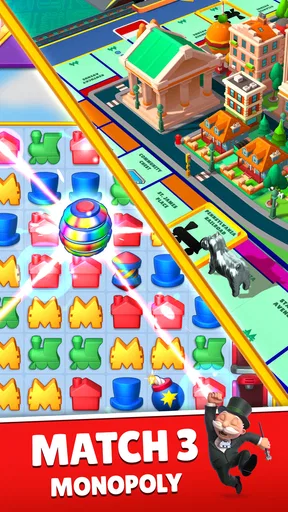
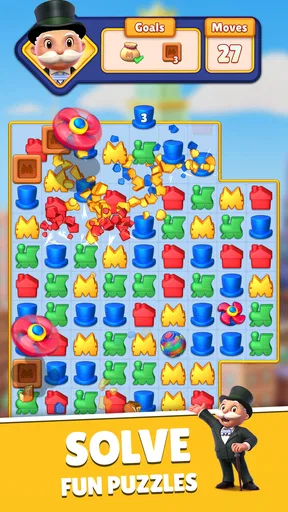
MONOPOLY Match is a casual match-3 puzzle game inspired by the classic MONOPOLY board game. You complete levels by matching identical pieces, creating special combinations, and meeting each stage’s objectives within a limited number of moves. Progress also unlocks familiar MONOPOLY-themed locations, characters, and events, giving the traditional property-trading theme a more relaxed, mobile-friendly format.
Is MONOPOLY Match free to download and play?
Yes, MONOPOLY Match can be downloaded and played for free on supported Android and iOS devices. However, it includes optional in-app purchases for items such as extra lives, boosters, coins, or other progress-related resources. You can generally advance without paying, although difficult levels and limited lives may encourage purchases. Parents should review device purchase settings before allowing children to play.
Does MONOPOLY Match require an internet connection?
An internet connection is recommended for MONOPOLY Match because online access may be needed to synchronize progress, participate in events, receive updates, access advertisements, and use certain social or competitive features. Some basic gameplay may work temporarily when you are offline, but availability can vary by version and device. Connecting regularly helps ensure that your progress and rewards are saved correctly.
Is MONOPOLY Match suitable for children and families?
MONOPOLY Match is generally easy for families to understand because its main gameplay uses simple match-3 mechanics, colorful graphics, and short levels. Nevertheless, it contains optional purchases, advertisements, timed events, and mechanics that may encourage continued play. The appropriate age rating can differ between platforms and regions, so adults should check the store listing and enable parental controls if younger players will use the app.
What should I know about lives, boosters, and in-app progression?
Like many match-3 games, MONOPOLY Match uses a progression system that may include limited lives, level objectives, coins, and special boosters. Losing a level can consume a life, while boosters can make challenging boards easier by clearing multiple pieces or changing the layout. These resources can often be earned through play, but purchases or advertisements may offer faster access, so patience is useful if you want to play without spending money.
Play our best games!


